
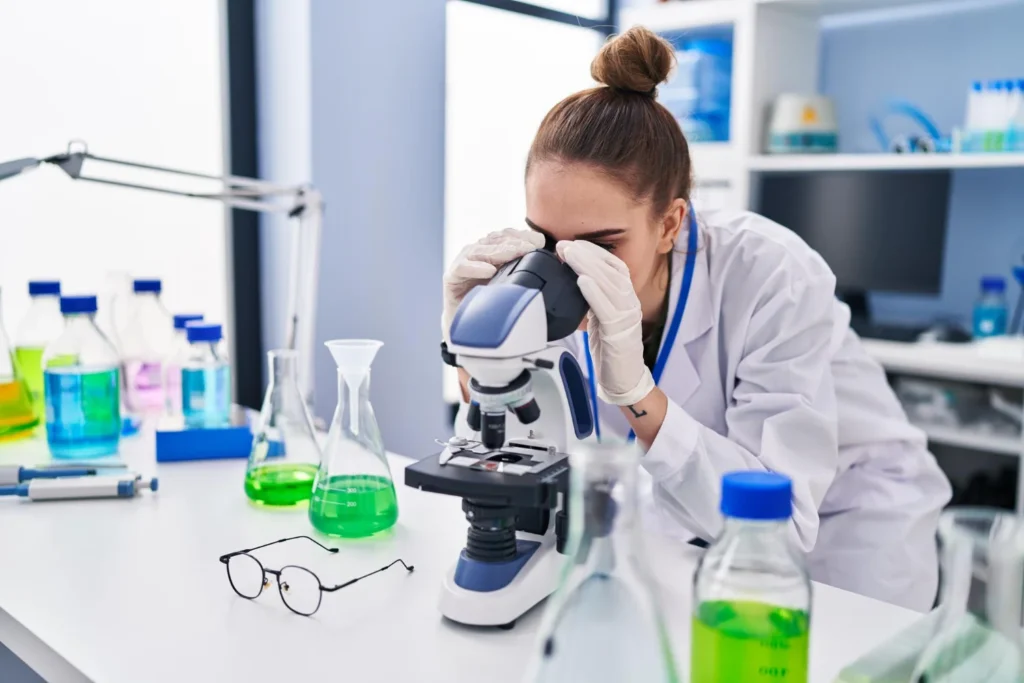
For Research Use Only. BPC-157 is provided strictly for laboratory and scientific research purposes. It is not intended for human or veterinary use. This article provides general educational information based on publicly available scientific literature to support researchers working with this synthetic peptide in controlled laboratory settings. Researchers must comply with all applicable UK laws, MHRA guidelines, institutional ethics requirements, and safety protocols.
Abstract
BPC-157 (Body Protection Compound-157) is a synthetic pentadecapeptide derived from a protective protein found in human gastric juice. It is widely used in preclinical research as a tool to study tissue repair mechanisms, cytoprotection, and various physiological pathways in laboratory models.
Chemical Structure and Properties
BPC-157 is a 15-amino acid peptide with the sequence:
Gly-Glu-Pro-Pro-Pro-Gly-Lys-Pro-Ala-Asp-Asp-Ala-Gly-Leu-Val
It is stable in gastric acid and exhibits good solubility in aqueous solutions, making it a practical compound for various experimental applications.
Source: Structural Overview of BPC-157
Mechanism of Action in Research Models
In laboratory settings, BPC-157 interacts with multiple biological systems. Research has focused on its potential modulation of growth factors, angiogenesis, and inflammatory pathways in cell culture and animal models.
It is frequently studied for its interactions with the nitric oxide system, VEGF, and other signaling molecules involved in tissue response.
Source: Research on BPC-157 Mechanisms
Historical Development and Research Use
BPC-157 was first isolated and synthesized from gastric proteins in the 1990s. Since then, it has become a popular research peptide in studies examining wound healing, tendon and ligament repair, gut integrity, and organ protection in preclinical non-human models.
Source: Historical Context of BPC Research
Common Research Applications
BPC-157 is used in laboratory investigations involving:
- Tissue regeneration and repair models.
- Gastrointestinal cytoprotection studies.
- Angiogenesis and vascular research.
- Inflammatory and oxidative stress response assays.
- Musculoskeletal injury models in animals.
It serves as a valuable pharmacological tool for exploring cytoprotective mechanisms.
Source: Preclinical Applications of BPC-157
Laboratory Handling and Considerations
As with other research peptides, BPC-157 should be stored lyophilized at low temperatures. Reconstituted solutions require fresh preparation and proper handling.
Researchers should verify purity through HPLC and mass spectrometry and follow standard laboratory safety protocols.
Source: Peptide Handling Guidelines
Regulatory Status in the UK
BPC-157 is not approved for any non-research use in the UK. It is sold exclusively for laboratory research purposes.
Any use outside approved scientific protocols may violate MHRA regulations and UK law. Researchers are fully responsible for ensuring compliance with institutional and national requirements.
Conclusion
BPC-157 is a synthetic peptide that continues to be an important research tool in preclinical studies of tissue protection and repair mechanisms. Ongoing laboratory research aims to further elucidate its molecular actions and potential applications in basic science.
This article is provided for educational purposes to support laboratory research. For experimental design, methodology, or data interpretation, consult primary peer-reviewed literature and qualified research professionals.
Selected References & Further Reading
- PubMed — BPC-157 Studies
- ScienceDirect — BPC-157 Research